



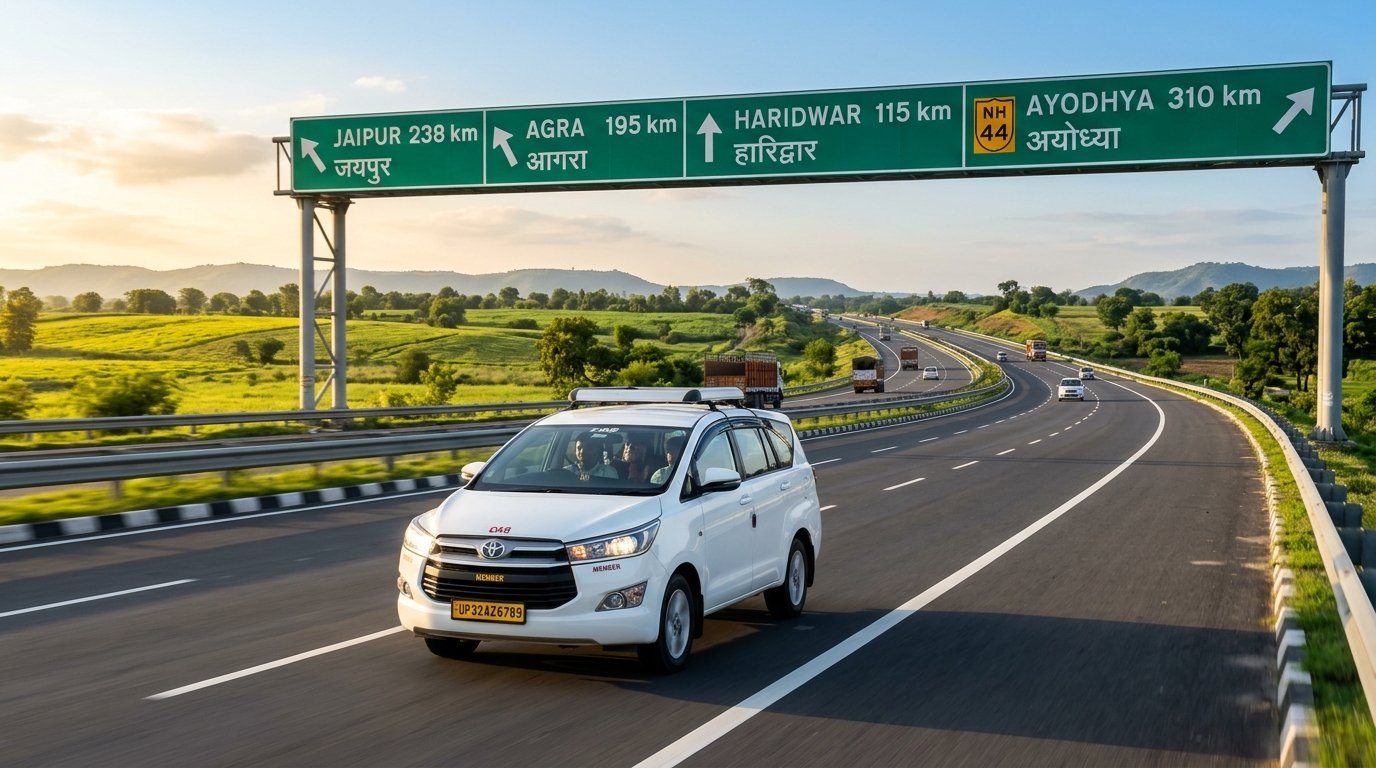
Road trips across Northern India have undergone a revolutionary transformation over the past three years. Gone are the days when driving from Delhi to neighboring state capitals meant crawling through congested town bazaars, bumpy single-lane detours, and unending highway bottlenecks.
With the rapid expansion of world-class, access-controlled corridors like the Delhi–Mumbai Expressway (NE-4), Delhi–Meerut Expressway (NE-3), and the Yamuna & Agra–Lucknow Expressways, intercity travel by road is now faster, safer, and far more comfortable than battling crowded railway stations or dealing with airport security queues.
For families traveling with senior citizens, corporate teams on tight schedules, and weekend getaway seekers, hiring a professional outstation cab service in Delhi has emerged as the premier choice for seamless doorstep transit.
In this guide, we break down why highway travel is surging, the top road corridors you can cover in under a day, and the smart booking hacks that save you up to 40% on car rentals.
1. The Rise of One-Way Intercity Cabs: Why Pay for Return Mileage?
Historically, the biggest drawback of hiring an outstation taxi in India was the two-way pricing trap. Even if a passenger only needed a drop to their hometown, university campus, or a connecting flight in another city, traditional taxi operators charged for the round-trip distance, including the driver's empty return journey and night allowances.
Today, the modern one way taxi service model has eliminated this financial burden. Verified fleet operators now allow travelers to book single-direction transfers between Delhi NCR and over 150 Tier-1 and Tier-2 destinations across Rajasthan, Uttar Pradesh, Uttarakhand, Punjab, Haryana, and Bihar.
Key Financial & Travel Advantages:
- Pay Only for Actual Kms: Zero penalty for the vehicle's return trip.
- Guaranteed Doorstep Pickup: Direct collection from your residence or Delhi Airport terminals with zero local transfer hassles.
- Transparent FASTag Inclusion: Clear, upfront billing that covers fuel, state taxes, and toll plaza clearances.
2. Top 3 High-Speed Road Corridors You Can Cover from Delhi NCR
A. The Royal Heritage Corridor: Delhi to Jaipur
Thanks to the operational Sohna–Dausa stretch of the Delhi–Mumbai Expressway (NE-4), the journey to Rajasthan’s Pink City has shrunk from an exhausting 6 hours to an effortless 3.5 to 4 hours.
- Highway Condition: 8-lane asphalt surface with dedicated rest plazas and speed limits capped at 120 km/h for private cars.
- Pro-Tip: Reserving a private Delhi to Jaipur taxi allows you to detour comfortably to historic marvels like the Chand Baori stepwell in Abhaneri or Neemrana Fort without public transit delays.
B. The Sacred Ganga Threshold: Delhi to Haridwar & Rishikesh
The 14-lane Delhi–Meerut Expressway (NE-3) transitioning into the 4-lane NH-334 has rewritten travel times to the Shivalik foothills. Travelers can now reach the holy bathing ghats of Haridwar in just 3.5 to 4 hours.
- Ideal Departure: Depart Delhi NCR between 5:00 AM and 6:00 AM to cross Ghaziabad before morning traffic, and halt for hot parathas at iconic highway retreats like Cheetal Grand near Khatauli.
- Travel Recommendation: Booking a verified Delhi to Haridwar cab guarantees direct drop right at your ashram or riverside camp, with ample boot space for puja essentials and family baggage.
C. The Divine Heritage Highway: Delhi to Ayodhya Dham
With the opening of the Shri Ram Janmabhoomi Mandir, millions of devotees travel from the national capital to the banks of the Sarayu River. Connecting the Yamuna Expressway with the Agra–Lucknow Expressway and NH-27, the 680-kilometer drive is completed smoothly in 9.5 to 10.5 hours.
- Driver Advice: Long-distance family yatras require high vehicle comfort. Opting for a spacious Delhi to Ayodhya taxi (such as a Toyota Innova Crysta or Maruti Ertiga) ensures comfortable legroom for elderly parents, smooth highway suspension, and zero fatigue over 600+ kilometers of expressway driving.
3. The 4 Golden Rules for Booking an Outstation Cab in India
- Insist on Commercial Yellow-Plate Vehicles: Never travel inter-state in private white-plate cars operated illegally as taxis. Commercial yellow-plate vehicles carry mandatory passenger transit insurance and hold verified national transport permits.
- Verify Boot Luggage Space (Avoid the CNG Trap): City-based ride-hailing hatchbacks often have large CNG cylinders mounted in the boot, leaving virtually no room for luggage. Always confirm a dedicated petrol or diesel vehicle with a clear boot before starting.
- Check Chauffeur Highway Experience: Driving at high speeds on expressways demands disciplined lane adherence and knowledge of night driving protocols. Reputable operators assign drivers with at least 8+ years of inter-state experience.
- Choose Zero Advance Deposit Operators: Avoid companies that demand 100% upfront payment before dispatch. Trustworthy fleets allocate your car, let you inspect it upon morning arrival, and allow you to pay upon reaching your destination.
4. Final Thoughts
North India’s highway network is among the fastest-improving infrastructure corridors in the world. Whether you are heading out for a spontaneous weekend retreat, planning an annual temple yatra, or attending a destination wedding, traveling by road with a trusted chauffeur delivers unmatched freedom, safety, and cherished memories with loved ones.
About the Author: This article is presented by the Editorial Desk at Indian Travellings, a verified outstation car rental and intercity chauffeur operator headquartered in Delhi NCR. For bookings, transparent fare charts, and 24/7 highway assistance, call or WhatsApp +91 9625024841.